
Naperville Integrated Wellness
NAPERVILLE'S TOP RATED LOCAL® FUNCTIONAL MEDICINE FACILITY

Women’s Digestion Solutions: Probiotics Part #1
Dr. Clinton Sexton
Part #4 Probiotics
(Part A)
This is Part 4 of the 5-part series and I will discuss the importance of Probiotics, prebiotics and glut flora health. In Part 1 we covered Diet, Part 2 Nutrition, Part 3 Hormones; now we will go over the importance of establishing and maintaining a healthy balance of organisms living in the digestive tract.
Microbiome
Microbiome; what is it and how does it affect your digestive tract and health? The microbiota is the entire collection of microorganisms that live in and on your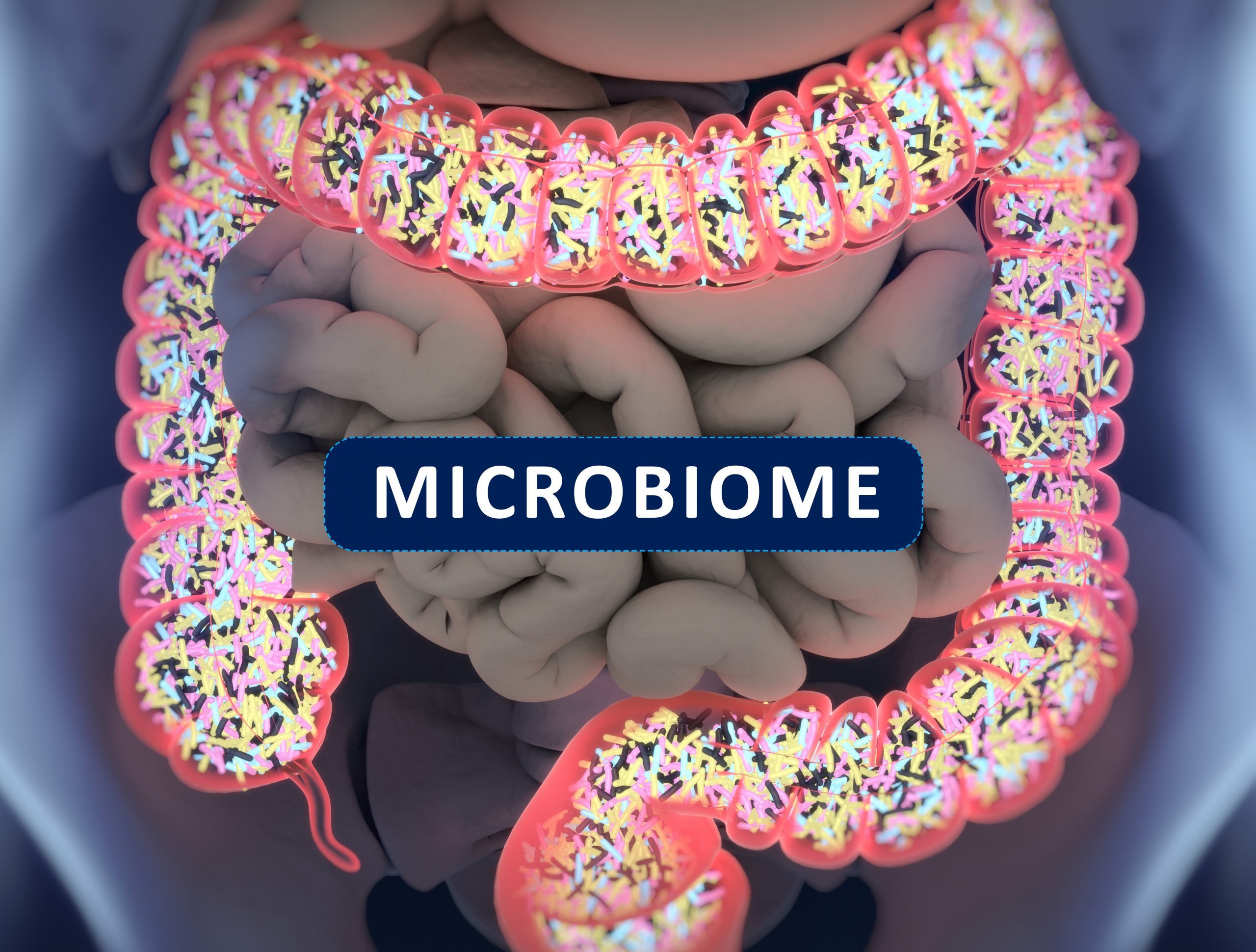 body. The word microbiome refers to the genes within the microbiota. Let’s break this down and make it a bit easier to understand:
Microbiota: the bacteria, fungi, yeast, viruses…that live in our body and on your body. Since we are talking about digestion; lets keep the focus on all the different organisms that are living in your bowels.
Microbiome: all of the organisms living in your bowels have their own genetic material and create all kind of chemicals that interact with your body and these chemicals can improve or harm our digestion and health overall.
Your mixture of intestinal organism (microbiota) and the effect they have on your body (microbiome) is unique to you. It is like a fingerprint and nobody has the same complex mixture organisms and the effect these organisms create on your body and health.
Many different factors lead to the creation of your unique microbiome because the mixture of organisms living in your bowel are determined by many factors, including your diet, stress level, age, gender and nutrient status.
We don’t know exactly how many types of organisms live in the digestive tract but there are believed to be more than 500 different bacteria, yeast and viruses living in our bowels. Not only are there many different types of organisms, they exist in very large numbers! We have more of these organisms living in our bowels than we have cells in our entire body!
Probiotics
If you have digestion problems, then you may have tried taking a probiotic. Probiotics usually come in a capsule, tablet or powder from and they contain high levels of certain bacteria and in some cases, yeast. If taking a probiotic solves your digestion problems, then that is great! However, for most women, taking probiotics does not solve their digestion problems.
Why don’t probiotics always help?
There are several reasons for this. First of all, you have literally hundreds of DIFFERENT types of bacteria living in your digestive tract. Odds are, if you took a probiotic it had LESS than 10 different types of bacteria. You must understand that the balance of your microbiota (all the different critters living in your bowls) is extremely diverse and unique to you…and only you. So, taking a probiotic that contains billions and billions of just a few types of bacteria is often not the solution to many women’s digestion problems. Like I mentioned above, the number and types of organisms living in your gut are not determined by the probiotics you take but by many different factors including your stress levels, diet, nutrition status, hormonal balance…everything unique to you. Your unique microbiota are a mirror of you and you become a mirror of them…they cannot be separated. This is why I believe the best way to improve your microbiota and your microbiome is to improve as many of the variables that influence what is living in your digestive tract. Sure, popping a probiotic easy to do, but in many cases, it simply is not enough to resolve chronic digestion issues.
Is food a probiotic?
How did we get these beneficial organisms into our gut before probiotic supplements? We would get them from our diet. I’m not against taking probiotics and they do help many people but improving your diet can also act as probiotic and provide a much greater diversity of organisms than a probiotic supplement can.
Consuming more whole fresh foods can improve your probiotic intake. Fresh fruits and vegetables have living organisms on them and they act like a probiotic. You can even consider eating more fermented food or drinks. Depending your tolerance to certain foods you might consider yogurt, kimchi, kombucha or other fermented foods.
So, in addition to taking a probiotic you can make some dietary changes that will not only add more beneficial bacteria to your gut, but you will create a diversification that you simply cannot get from a probiotic.
Take a few moments and “digest” what you have just read.
I hope you have found the information in Part #4A of the Women’s Digestion Solutions helpful!
Health and Happiness,
Dr. Sexton
If you would like more information about women’s digestion, functional medicine or Dr. Sexton contact our Naperville office go to www.napervilleintegratedwelness.com
Do your own research, inform yourself and ask lots of questions. When collecting information you MUST consider the source. There is no shortage of false, misleading, outdated, profit-driven and utterly biased information in healthcare today; even from the most respected sources and organizations.