
Naperville Integrated Wellness
NAPERVILLE'S TOP RATED LOCAL® FUNCTIONAL MEDICINE FACILITY

What doctors don’t know about Hashimoto’s
Do you still have symptoms of low thyroid function?
I see many patients in my office who have been diagnosed with Hashimoto’s disease and many who have not been diagnosed because they were never tested for it. When someone is diagnosed with Hashimoto’s disease, they are often told that it is an autoimmune disease that is going to destroy their thyroid gland over time. They are not told that anything can be done, other than wait until enough destruction has taken place to warrant the use of thyroid hormone medications. “Treatment for Hashimoto’s disease may include observation and use of medications. If there’s no evidence of hormone deficiency, and your thyroid is functioning normally, your doctor may suggest a wait-and-see approach. If you need medication, chances are you’ll need it for the rest of your life.” https://www.mayoclinic.org/diseases-conditions/hashimotos-disease/diagnosis-treatment/drc-20351860 As you can see, the only advice most people get is “wait and see” which means, wait until your thyroid gland is so damaged that you will require medication for the rest of your life. Taking a wait and see approach does not do anything to help support better immune function and does help reduce the odds of developing a second or third autoimmune disease. “Autoimmune disorders that occur with increased frequency in patients with Hashimoto’s thyroiditis include… https://www.medicinenet.com/diseases_are_linked_to_hashimotos_thyroiditis/ask.htm Do you want to “wait and see” if you get another autoimmune disease? Or would you rather be proactive and do what you can to prevent more diseases? And maybe the tests below Many times, the only test ordered is the TSH. This is not even a thyroid hormone! It is a hormone from your pituitary gland in your head. There are several factors that can alter your TSH levels that have nothing to do with your thyroid hormone levels. Stress changes TSH, inflammation changes TSH and cortisol from the adrenal glands change TSH too. “Elevated TSH is associated with elevated cortisol…” https://www.ncbi.nlm.nih.gov/pmc/articles/PMC3520819/ Many patients go round and round with their doctor, constantly changing their thyroid medication because their doctors is doing what I call “chasing TSH”…keep adjusting medication not based on sufficient thyroid hormone testing and how the patient feels but instead assuming (erroneously) that the level TSH is the ruling factor. Did you know that other hormone imbalance can change your thyroid test results? Estrogen dominance generally refers to an imbalance in your levels of estrogen and progesterone. This occurs most often in women between the ages of 35 and 50 as a result of decreased progesterone production. Imbalances of estrogen, progesterone and testosterone can alter your thyroid hormone test results. As you can see, proper assessment of optimal thyroid hormone levels can be affected by several variables that are very commonly present today in our population. Stress, inflammation, cortisol imbalances from the stress glands (adrenal glands), other hormone imbalances and even nutrient deficiencies. Functional medicine doctors look at the different causes of thyroid imbalance. Functional medicine does not take a “wait and see” approach to any autoimmune disease. If you would like more information about functional medicine and integrative medicine or Dr. Sexton go to napervilleintegratedwellness.com Do your own research, inform yourself and ask lots of questions. When collecting information, you MUST consider the source. There is no shortage of false, misleading, outdated, profit-driven and utterly biased information in healthcare today; even from the most respected sources and organizations. This approach to healthcare is not intended to diagnose, treat, cure, mitigate, or prevent any disease. This article is for information purposes and is not a substitute professional healthcare services. Contact our office for more information.Mayo Clinic
 There are a few flaws with this medical “logic.” As a functional medicine doctor, I don’t take a wait and see approach to Hashimoto’s disease.
 #1 you have an autoimmune disease!
What are we waiting for?
Your thyroid gland may be the least of your problems!
#2 You still have symptoms of low thyroid function!
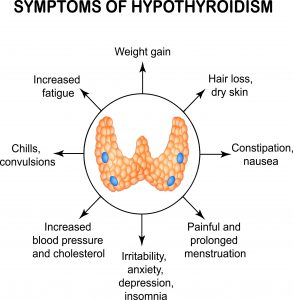 Many of these symptoms persist because of the effect of having an autoimmune disease on the rest of the body. If the only problem Hashimoto’s caused was low thyroid hormone levels, then taking medication would resolve all of the symptoms of low thyroid function.
#3 Most doctors do not order adequate thyroid tests!
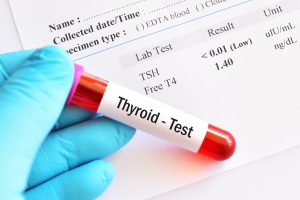 Most of the testing I see in my office from other doctors include the following thyroid tests:
Other hormones affect thyroid test results
 “Excess estrogen levels or “estrogen dominance” causes the liver to produce high levels of thyroid binding globulin (TBG), which, as its name suggests, binds the thyroid hormone and decreases the amount of thyroid hormone that can be assimilated and utilized by the cells.”
How will a “wait and see approach” change anything?
The purpose of functional medicine is:
Understanding how the body works, knowing how and where to investigate health issues, knowing what to look for, understanding the significance of what is found and creating a plan of action to reverse and correct the root cause the health problems.
My wish for you…health, happiness and a better quality of life!