
Naperville Integrated Wellness
NAPERVILLE'S TOP RATED LOCAL® FUNCTIONAL MEDICINE FACILITY

Weight Gain After Stopping GLP-1? Weight Loss Should Improve Your Life—Not Compromise Your Health
Weight loss should improve how your body functions, not leave you dealing with digestive issues, fatigue, muscle loss, or a metabolism that feels increasingly fragile. Are you experiencing weight gain after stopping GLP-1? Many people all across the United States are seeing the same results. Yet for many people, that is exactly what happens. Medications such as Ozempic®, Wegovy®, Mounjaro®, and Zepbound® have made it easier than ever to move the scale, but they have not changed the underlying biology that caused weight gain in the first place. Suppressing appetite is not the same as restoring metabolic health, and weight loss achieved without repairing gut function, hormone signaling, insulin resistance, and muscle mass is often temporary—and sometimes damaging. From a functional medicine perspective, the real question is not whether weight can be lost, but what that weight loss costs the body long term and whether it supports true, sustainable health. Learn more from our functional medicine doctor about GLP-1 medications and the future.
The Truth About GLP-1 Medications and Metabolic Repair
 Functional medicine views weight loss as a reflection of metabolic health, not a result of appetite suppression alone. This approach focuses on repairing gut function, insulin response, hormone signaling and muscle integrity so weight loss supports long-term resilience rather than creating hidden dysfunction.
WEIGHT LOSS SHOULD IMPROVE YOUR LIFE—NOT COMPROMISE YOUR HEALTH
Yet for many people today, weight loss comes at a cost: digestive dysfunction, gut dysbiosis, fatigue, muscle loss, stalled metabolism, and a body that no longer knows when it’s hungry or full.
Medications such as Ozempic®, Wegovy®, Mounjaro®, and Zepbound® have changed how quickly the scale can move—but they have not changed the underlying biology that caused weight gain in the first place. Appetite suppression is not metabolic healing. And weight loss achieved without repairing gut health, hormone signaling, insulin resistance, and muscle mass is often temporary—and sometimes damaging.
From a functional medicine perspective, the real question isn’t “Can you lose weight?” This article examines why GLP-1 weight-loss medications often function as short-term solutions, why symptoms are frequently dismissed instead of investigated, and why sustainable weight loss must be built on metabolic repair—not appetite suppression alone. Weight loss has never been a single-variable problem. Long before injectable medications entered the mainstream, sustainable fat loss required alignment between nutrition, movement, hormones, sleep, nervous system regulation, and metabolic flexibility. So why did medications become the dominant narrative? Because they offer something many people have never experienced before: a quieted appetite without effort. For individuals who have struggled with cravings, constant hunger, and repeated failure despite “doing everything right,” the promise feels like relief. And to be clear—the appeal makes sense. But the problem is this: The scale can move while inflammation persists. Understanding both the benefit and the risk requires understanding the mechanism. Ozempic® (Semaglutide) Weight loss on Ozempic® is primarily driven by appetite suppression and slower digestion, producing rapid results on the scale without necessarily improving the body’s underlying metabolic function. When the medication is discontinued, hunger signals often return before the body’s energy-burning capacity, lean tissue strength, and overall metabolic efficiency have recovered, making weight regain common. Without addressing these physiological factors during treatment, many patients regain weight even if their eating habits remain consistent. Wegovy® (Semaglutide) Wegovy® works through the same mechanisms as Ozempic® but at higher doses specifically targeting obesity. After stopping the medication, appetite hormones typically normalize faster than the body’s metabolic adaptation, including tissue energy utilization and muscle preservation, which can result in rapid weight rebound. Functional medicine views this as a reflection of unresolved metabolic imbalance rather than a failure of self-control. These drugs mimic the hormone GLP-1, which: Rapid initial weight loss from these medications can be achieved, but without addressing the body’s underlying metabolic and hormonal imbalances, the results are often temporary. Functional medicine emphasizes restoring energy regulation, tissue health, and digestive function to maintain sustainable weight loss once treatment ends. Mounjaro® (Tirzepatide) Mounjaro® activates both GLP-1 and GIP pathways, often producing more significant initial weight loss, but this does not necessarily restore long-term metabolic function. Once the drug is discontinued, glucose regulation and energy efficiency may deteriorate if underlying causes of insulin resistance, inflammation, or lean tissue loss were not addressed. Patients who relied on the medication as the primary tool often experience weight regain because the body’s foundational metabolic systems were not strengthened. Zepbound® (Tirzepatide) Zepbound® is intended for chronic weight management, yet discontinuation often highlights the body’s dependence on pharmacologic appetite control. As hunger cues return and digestion resumes normal patterns unevenly, weight regain is common if the patient’s metabolic health, muscle function, and energy utilization were not supported during treatment. Functional medicine emphasizes rebuilding these systems to maintain weight loss once the medication is stopped. These activate both GLP-1 and GIP receptors, further: Here’s the critical distinction: These medications reduce hunger—but they do not correct why hunger became dysregulated. They do not repair gut-brain signaling. Early weight loss often feels “effortless” not because the system is healthier—but because biological drive has been chemically muted. That matters. Patients can lose significant weight while: From a functional medicine lens, this is cosmetic improvement layered over unresolved dysfunction. Many side effects are labeled “expected,” which often means they’re ignored. Common symptoms include: These symptoms are not random. They often reflect: Instead of investigating the cause, patients are frequently told their body will “adjust.” Sometimes it does. Often, it doesn’t. From a functional medicine perspective at Naperville Integrated Wellness, these patterns reflect a deeper disruption of metabolic communication, where muscle loss, slowed digestion, impaired bile flow, and blunted hunger signals collectively weaken the body’s ability to regulate weight and energy naturally. Rather than isolated side effects, they represent interconnected systems under strain—highlighting why sustainable weight loss requires restoring metabolic function, not overriding it. Muscle Loss and Metabolic Slowdown As lean mass declines, the body compensates by becoming more metabolically efficient, burning fewer calories to perform the same functions. This adaptive slowdown makes long-term weight maintenance increasingly difficult and helps explain why weight regain is so common once medication support is reduced or stopped. Persistent Gut Motility Dysfunction Delayed gastric emptying can evolve into chronic digestive slowdown, increasing the risk of reflux, constipation, bacterial overgrowth, and bloating—even after stopping medication. Over time, reduced digestive movement can impair nutrient breakdown and absorption, placing added stress on the gut lining and microbiome balance. When normal motility fails to recover, patients may continue experiencing digestive discomfort long after medication use has ended, signaling a deeper disruption rather than a temporary side effect. Gallbladder Stress and Bile Flow Disruption Reduced intake and slowed digestion impair bile flow, increasing gallbladder stress and stone risk. When food intake drops and digestion slows, the gallbladder is stimulated less frequently, allowing bile to become concentrated and stagnant. Over time, this impaired bile release can interfere with fat digestion and increase the likelihood of gallbladder dysfunction, particularly during rapid or prolonged medication-assisted weight loss. Disrupted Hunger and Satiety Cues Some patients lose the ability to recognize hunger and fullness long after discontinuation—leaving them metabolically disconnected rather than regulated. Extended appetite suppression can blunt the body’s internal feedback systems, making it difficult to accurately sense when nourishment is needed or when intake is sufficient. Instead of restoring balance, this disconnection can leave individuals relying on external rules or medications rather than internal metabolic cues to guide eating. When medication is stopped: This creates a predictable cycle: The medication didn’t fail. The result for over 82% of the population, weight gain after stopping GLP-1. There is hope, it wasn’t the drugs which were the culprit. These drugs are not inherently wrong—but they are not benign. They may be appropriate for: Caution is warranted for those with: In these cases, appetite suppression can worsen existing dysfunction. From a functional medicine perspective, the issue isn’t weight loss—it’s how weight loss is achieved. Suppressing appetite without repairing physiology: Reliance without strategy trades visible success today for physiological vulnerability tomorrow. Functional medicine asks a different question: Why did weight gain occur in the first place? That requires assessing: The goal is not rapid loss. When used at all, they should be: They must be paired with: Preventing rebound weight gain is not optional—it is the strategy. Chasing numbers without context is risky. Weight loss that: …is not progress—it’s postponed consequence. Experience matters. When health improves, weight loss follows—not the other way around. At Naperville Integrated Wellness, weight loss is never treated as a standalone goal—or a race to move the scale. We work with patients who are frustrated by: Our approach is different by design. It’s important to be clear: we do not prescribe weight-loss medications. What we do provide is the clinical evaluation, metabolic insight, and physiological guidance that is often missing from medication-only approaches. As a functional medicine clinic, our role is to help patients understand: For patients who are already using GLP-1 medications through another provider, we help: For others, we help determine whether medication-free metabolic repair is the better path from the start. Our focus is not on weight loss at any cost. Our focus is restoring metabolic resilience so weight loss becomes sustainable. If you are considering GLP-1 medications—or are already on them—and want guidance that prioritizes your long-term health, function, and quality of life, we can help you navigate that decision intelligently. Contact us today to schedule an appointment. Call Naperville Integrated Wellness at 630-210-8391 Because weight loss should improve how your body functions—not compromise it. *Naperville Integrated Wellness does not prescribe weight-loss medications but provides functional medicine evaluation and metabolic support for patients considering or currently using them.
It’s “What does that weight loss cost your long-term health?”Weight Loss Has Many Paths—Why GLP-1 Drugs Became the Loudest One
Weight loss alone is not the same as metabolic health.
Blood sugar can improve while insulin resistance drivers remain.
Clothes can fit better while physiology becomes more fragile.What GLP-1 Weight Loss Medications Actually Do in the Body
Semaglutide-Based Medications (Ozempic®, Wegovy®)
Tirzepatide-Based Medications (Mounjaro®, Zepbound®)
They do not restore metabolic flexibility.
They do not rebuild muscle.
They do not address chronic inflammation, stress hormones, or nutrient depletion.Why the Scale Moves—But the Root Problem Often Doesn’t
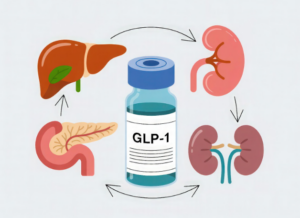 Most weight loss on GLP-1 medications occurs through reduced caloric intake, not improved metabolic efficiency.
Common Short-Term Side Effects Patients Experience on GLP-1 Drugs
Long-Term Effects Seen with Extended GLP-1 Use
What Happens When Lifestyle Isn’t Addressed
The strategy was.Who These Medications May Help—and Who Should Be Cautious
Why Weight Loss Medications Often Function as a Band-Aid
The Functional Medicine Role in Weight Loss—With or Without Medication
The goal is metabolic resilience.When GLP-1 Medications Are Used Strategically
Closing Perspective: Health First, Weight Second
Physiology matters.
And sustainable outcomes require more than appetite suppression.A Smarter, Safer Path Forward at Naperville Integrated Wellness