
Naperville Integrated Wellness
NAPERVILLE'S TOP RATED LOCAL® FUNCTIONAL MEDICINE FACILITY

Why Can’t I Lose Weight? – Functional Medicine Doctor says, “You can test or you can guess”.
When nothing seems to work…
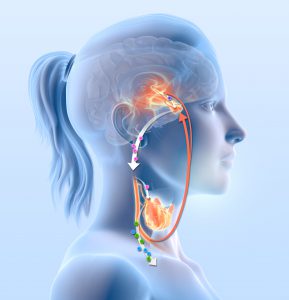
Functional medicine for weight loss is what many individuals need to get the weight off. If you don’t know why you can’t lose weight, then you won’t be able to fix the problem. Functional medicine looks for the root cause of weight gain and directs treatment at the cause not the effect. Difficulty losing weight is one of the most common reasons people contact my office. Most of them have tried several types of weight-loss diets, cutting calories, and exercising more. For many people, doing one or more of these things will result in successful weight loss…for others it just does not help. The scale won’t budge and your clothes still feel tight. Maybe you have tried one or more of these diets: Plant-based, Low-carb, Low-fat, Paleo, Whole 30, Mediterranean, Weight Watchers or the DASH diet. You might have combined one or more of these with intermittent fasting to try to make more progress. When nothing seems to be working, its time to look for roots causes that are preventing you from reaching your ideal weight. The top 3 reasons most of my patients can’t lose weight fall into 3 categories; and most you might be surprised to find out that thyroid problems are not the most common reason. There are of course other reasons you may not be! I like to use blood tests to measure the person’s immune system response to foods so that we can gain a better understanding of their body “likes and does not like.” This inflammation can become a vicious cycle…foods can lead to increased amounts of body fat and then the increased body fat is itself a source of inflammation. This combination of events can alter the metabolism of the individual. Your brain plays the main role in determining your metabolism…not your thyroid. Your thyroid function is not regulated by the thyroid gland itself, but by the hypothalamus (part of your brain) which regulates the pituitary gland (it makes the TSH that activates thyroid hormone production). “Substantial evidence indicates that the brain plays a central role in the regulation of energy metabolism. … This information on energy intake and body energy stores is transferred to specialized neurons in the hypothalamus and brainstem. In order to maintain energy homeostasis, the brain regulates diverse aspects of body metabolism, such as food-seeking behavior; gastric emptying; nutrient uptake in the gut; thermogenesis (heat production); insulin secretion; and the effects of insulin in the liver, adipose tissue, and skeletal muscle.” Eating foods that cause inflammation in the body lead to altered metabolism, which leads to increased weight gain, which leads to even more inflammation. And you wonder why you can’t lose weight! A reminder that functional medicine for weight loss can truly help! Losing weight with Hashimoto’s disease can be challenging. Hypothyroidism medication for weight loss is something that must be evaluated. Sometimes the problem is due to insufficient medication or how your body uses the medication. There are different types of thyroid hormone medication and they can contain different types of thyroid hormone. The hormone may be natural or synthetic. Sometimes the hormone is in the form of T4 or T3 and sometimes the medication contains both. Most of my patients who have Hashimoto’s disease or non-Hashimoto’s hypothyroidism are convinced that the reason they can’t lose weight is because of their thyroid. Sometimes they are right, but sometimes they are not. I perform extensive thyroid testing on most of my patients because there are many ways that thyroid hormones can interfere with weight loss. Sometimes imbalances of other hormones like estrogen can interfere with how thyroid hormones will function in your body. Inflammation can also interfere with your metabolism and how your body uses thyroid hormone. Just having excess body fat can increase estrogen and inflammation in your body. It can become a vicious circle of weight gain and difficulty losing weight. Most patients who are taking thyroid medication are taking the thyroid hormone called T4 or thyroxine or levothyroxine. Levothyroxine and weight loss are not necessarily connected.. T4 is not active form of thyroid hormone and is actually called a “pro-hormone.” To get the full benefit of your T4 hormone, your body must convert this pro-hormone into the biologically active form of thyroid hormone called T3 or triiodothyronine. “Thyroxine (T4) is the major thyroid hormone in the thyroid gland and the circulation. However, it is widely accepted on the basis of abundant evidence that T3 is responsible for most, if not all, of the physiological effects of thyroid hormone… and T4 functions as the pro-hormone.” https://pubmed.ncbi.nlm.nih.gov/28130114/ If you don’t perform this conversion well, then you will still be in a state of hypothyroidism…even if your blood levels of T4 and TSH are “normal.” I want to explain a very important biological concept that your doctor is probably not aware of. If you are taking thyroid medication, make sure you pay attention to this part… Your body does 1 very important thing with T4 hormone (whether produced by your thyroid gland or as medication) …it will turn it into T3 or a different type of T3 called Reverse T3 (rT3). Your body has special enzymes called deiodinase enzymes and they are what convert your T4 into T3 or rT3. There are 3 types of deiodinase enzymes: This is what doctors don’t understand…the pituitary gland has its own special enzyme to turn T4 into T3 and this is what will determine your TSH levels. This is why your TSH can be go high or low and not accurately represent proper levels of T4 and T3 in the rest of your body. What I call “chasing TSH” is a mistake. TSH only tells you what your pituitary gland is doing, not what the rest of your body is doing! The following conditions can alter how D1, D2 and D3 will function in your body: The thyroid is very complex! You may not have enough T4 or T3 or too much rT3. Other hormones like estrogen, progesterone and testosterone can alter how your body uses thyroid hormone. Inflammation, adrenal gland imbalances, immune system problems, reduced cellular sensitivity to thyroid hormone are just a few of the common problems I see with my patients. It is not always so simple as increasing your medication or switching to a T4/T3 medication. Your gut health plays a major role in your metabolism and how much body fat you will maintain. One of the most important factors for gut health is a healthy microbiome. Your microbiome consists of the trillions of organisms that live in your digestive tract and the good and bad chemicals they are producing. Other studies have shown that changes in the gut flora can increase the rate at which we absorb fats and carbohydrates and increase the storage of calories as fat. This means that someone with bad gut flora could eat the same amount of food as someone with a healthy gut, but extract more calories from it and gain more weight. https://chriskresser.com/a-healthy-gut-is-the-hidden-key-to-weight-loss/ “Your gut bacteria may affect your weight by influencing how different foods are digested in your body.” “The gut bacteria also digest certain antioxidants found in plants known as flavonoids, which may help prevent weight gain.” Your gut bacteria can influence how dietary fats are absorbed in the intestines, which may affect how fat is stored in the body.” https://www.healthline.com/nutrition/gut-bacteria-and-weight#section2 Poor gut health can be caused by food sensitivities or food allergies, overgrowth of bad bacteria, yeast or the presence of parasites. Hormone imbalances, inflammation, autoimmunity, toxins and certain medications (like antacids) can all contribute to poor gut health. As a functional medicine doctor, I understand the important of digestive system health and the impact it can have on all of the other systems of the body. Summary I like to use blood tests to measure the person’s immune system response to foods so that we can gain a better understanding of their body “likes and does not like.” This inflammation can become a vicious cycle…foods can lead to increased amounts of body fat and then the increased body fat is itself a source of inflammation. This combination of events can alter the metabolism of the individual. Your brain plays the main role in determining your metabolism…not your thyroid. Your thyroid function is not regulated by the thyroid gland itself, but by the hypothalamus (part of your brain) which regulates the pituitary gland (it makes the TSH that activates thyroid hormone production). If diet and exercise are not working, then you need to take a different approach to your weight loss plan. You could be fighting chronic inflammation; your thyroid hormones may not be in balance or working as they should. You must also consider the possibility of poor gut health. Most people assume that if they don’t have any digestive symptoms, then they must have good gut health. This is not true. You can’t “feel” a leaky gut or a subtle imbalance of bacteria or overgrowth of yeast in your intestines. You can’t “feel” food sensitivities triggering the immune system that surrounds your gut. Just like your can’t “feel” your cholesterol going higher or your blood sugar creeping up. This is why testing is so important. You can test for inflammation, thyroid problems, digestive system problems. This type of functional testing is not done in traditional medicine. This is one of the way functional medicine for weight loss differs from traditional medicine. You can always make better decisions when you have all of the information. Testing provides answers, guessing does not. You can test or you can guess…3 Reasons You Can’t Lose Weight
#1 Inflammation
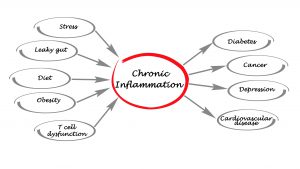 Chronic inflammation is the most common reason I have found that patients can’t lose weight. The most common sources of this inflammation are the foods they are eating. Many “healthy” foods are actually inflammatory for many people. We regularly test inflammation levels on our patients and then we look for what can be causing that inflammation; foods are the most common cause.
Testing Is Important
#2 Thyroid
Interference Of Estrogen
#3 Gut / Digestive Health
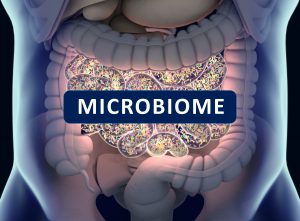 The human gut contains 10 times more bacteria than all the human cells in the entire body. With over 400 known diverse bacterial species. In fact, you could say that we’re more bacterial than we are human.
Testing vs Feeling