Naperville Integrated Wellness
NAPERVILLE'S TOP RATED LOCAL® FUNCTIONAL MEDICINE FACILITY

Natural Thyroid Support
Natural Thyroid Solutions with Functional Medicine
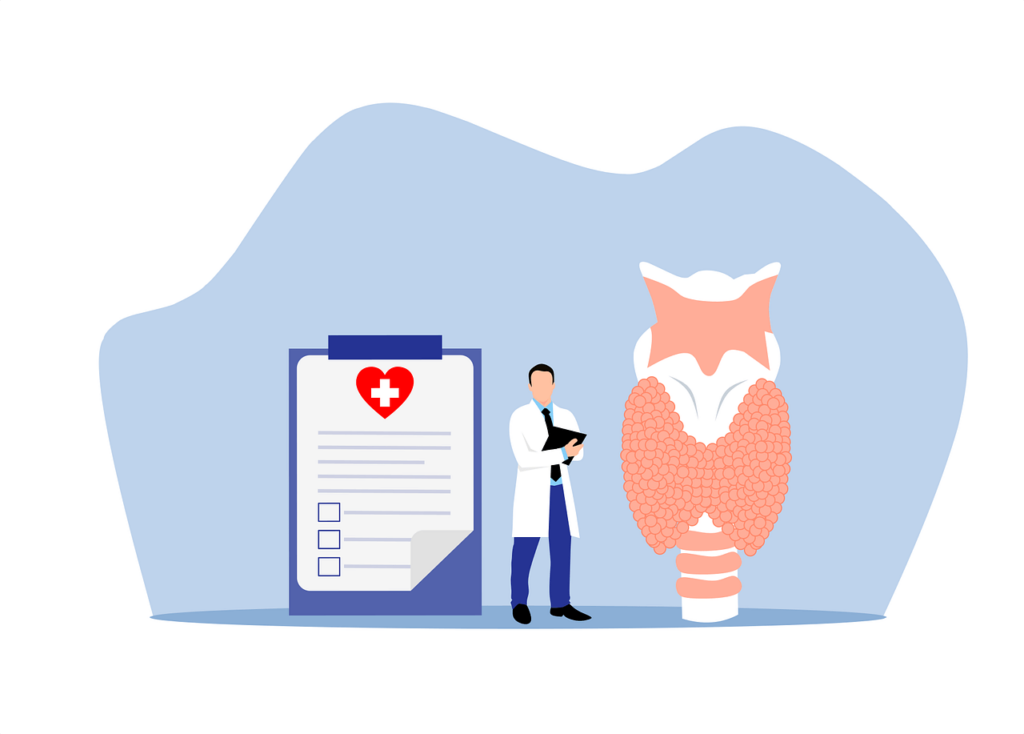
Thyroid disorders are extremely common today. Most common thyroid conditions can be divided into 2 categories, hypothyroidism, and hyperthyroidism. I will briefly discuss both conditions, along with some of the subtypes of each.
Hyperthyroidism vs Hypothyroidism
Hyperthyroidism is a condition where the thyroid is making too much thyroid hormone. Causes of hyperthyroidism include the following: Grave’s disease (autoimmune hyperthyroidism), thyroiditis (due to infection, medication or pregnancy), thyroid toxic goiter, thyroid nodules or tumors. The main treatments for hyperthyroidism include medication, radioactive iodine administration, and/or surgery. (Note: hyperthyroid conditions are not discussed further in this article.)
Hypothyroidism is a condition where the thyroid is making too little amount of thyroid hormone. Cause of hypothyroidism include the following: Hashimoto’s disease, removal of some or all of the thyroid, radiation treatment, medications, too much or too little iodine in the diet, or damage to the pituitary gland (responsible for thyroid stimulation hormone (TSH) which signals your thyroid to make thyroid hormone).
Of the two of these categories, hypothyroidism is the most common thyroid condition. Hypothyroid conditions and the symptoms associated will be the subject matter of this article.
WHAT ORGANS DOES THE THYROID AFFECT?
An important fact is that the thyroid is responsible for making hormones that affect every single cell in the body. It plays a role in brain development, bone maintenance, heart, muscle and digestive function. It also plays a significant part in reproductive function. The thyro is responsible for the regulation of basal metabolic rate. This means that thyroid hormones are involved in the energy expenditure in the body and thus has an influence in weight management. Essentially, there is not one organ system in the body that is not affected by thyroid hormone.
HYPOTHYROID SYMPTOMS
What are the signs and symptoms of hypothyroidism?
- fatigue, feeling cold (compared to others under same conditions)
- weight gain
- hair loss, including the outer ½ of the eyebrows
- thin, brittle, or weak nails
- dry skin
- sadness and depression
- menstrual irregularities
- gastrointestinal symptoms (constipation is common)
- sleep irregularities
- cognition issues
CONVENTIONAL MEDICINE TREATMENT
When it comes to low thyroid function, traditional treatment is thyroid medication. The most frequently prescribed medication in the United States is thyroid hormone, usually in the form of Synthroid/Levothyroxine. Women are much more likely to suffer from a thyroid problem than men; the American Thyroid Association states that women are 5 times more likely to develop a thyroid disorder and 1 in 8 women will suffer from thyroid problems during their lifetime. Unfortunately, 60% of those suffering from thyroid problems have not yet been diagnosed and an even greater number suffer from low thyroid function that does not meet the criteria for a medical diagnosis of hypothyroidism.
Traditional medicine has only one solution for low thyroid function and that is to prescribe thyroid hormones. While this may be the only solution for some patients (e.g. thyroid has been removed or severely damaged by the immune system), many others have natural alternatives to consider. Before we talk about natural thyroid support from a functional medicine perspective, let’s look at some thyroid basics.
FUNCTIONAL MEDICINE FOR THYROID
What does a functional medicine doctor do to heal the thyroid?
What if my thyroid test is “Normal”?
Many of my patients expect they have a ‘hormone problem’ because they are experiencing common symptoms. The truth is that many people have these symptoms even though the lab testing shows normal thyroid levels.
Ideal thyroid function depends on the rest of your body being healthy. As you can see, it is not simply a matter of pumping enough T4 / drugs into your blood stream. This conversion process is often ignored by traditional medicine and if your blood tests for TSH and T4 come back “normal” you are considered to have “ideal” thyroid function, even if you still have symptoms of hypothyroidism. The thyroid gland and its related functions can be complex and difficult to understand without a thorough knowledge of physiological processes involved. This is the essence of functional and integrated medicine, determining which systems of the body are failing and knowing how to restore normal function once again.
Do I have to take medicine to fix my thyroid?
Not all cases of thyroid dysfunction require medication. However, if you have had your thyroid removed, it will be necessary for you to be on thyroid medication for the rest of your life. If medication is necessary or required, you do have options. There are various forms of medication. Broadly speaking, thyroid medication can be broken down into 3 categories. The first is synthetic T4 hormone and this is the most prescribed thyroid medication. The second is T3 hormone and this is not as commonly prescribed. The 3rd is a combination of T4 & T3. Some of these medications are derived synthetically (chemically) and others are derived from natural animal sources.
One question I get a lot is: Are natural thyroid doctors the kind of doctors who prescribe NDT or natural desiccated thyroid? Simply stated, there are medications like Armour Thyroid and Nature-Thyroid, both of which are made from desiccated thyroid. These are medications that requires a prescription. This is not considered a standard treatment but is an option for treatment of low thyroid function. Alternatively, there are products that offer ground up beef thyroid as a supplement. You should use caution as the amount of thyroid hormone is not regulated in these supplements as they are with medication. And it is recommended that you work under the care of an experienced health care provider in the treatment of any thyroid condition.
Understanding Thyroid Hormones:
This is a simplified description of thyroid processes. Your thyroid gland produces a hormone called thyroxine (T4); this is also the hormone found in medications like Synthroid or levothyroxine. The next step in the process is that this T4 needs to be converted to another hormone called triiodothyronine (T3). This step is essential for normal thyroid health. In fact, T4 is considered a “pro-hormone.” A pro-hormone is a hormone that has MINIMAL hormonal effect by itself and is in the “inactive” state.
Pro-hormones travel in the blood stream to other organs where they get converted into their ‘’active” form. The active form of T4 is T3. Organs responsible for the conversion of T4 into T3 include the liver, intestines, kidneys, and the thyroid gland itself. As you can see, ideal thyroid hormones levels depend on more than just having enough T4. Poor conversion from pro-hormone (T4) into T3 is one the biggest problems we see with low thyroid function and poor response to T4 medications like Synthroid.
You might be wondering how important this conversion from T4 into T3 really is. It is ESSENTIAL! It has been estimated that T3 is up to 5x more active than T4. This means that you can have “normal” levels of T4 and still suffer with symptoms of hypothyroidism.
The conversion of T4 into T3 can also be disrupted by any or all of the following:
- Poor adrenal gland health
- Hormone imbalances
- Poor gut health
- Poor liver function and toxicity
- Chronic inflammation
- Lack of essential vitamins and minerals.
What if I have been told I have autoimmune thyroid?
It is important to understand that you may have thyroid antibodies, yet still have normal thyroid hormone levels. The presence of antibodies is an indicator of potential and possible ongoing damage to the thyroid. The antibody levels do not indicate the amount of damage to the thyroid. Your thyroid function is determined by its thyroid hormone production. Conventional medicine does not address the autoimmune component of hypothyroidism because the presence of antibodies does not change the treatment. Functional medicine offers treatment that may be able to address ongoing antibody production and possibly limit the damage to the thyroid.
What if all my thyroid tests are ‘normal’ but I have symptoms?
How do holistic thyroid doctors treat low thyroid symptoms when labs are ‘normal’? Functional medicine doctors are holistic and that means they will be looking for the underlying cause of your symptoms. In addition to running more types of thyroid labs, functional medicine practitioners also look at your labs differently than most conventional doctors. They look for your labs to be in optimal ranges not just within standard lab ranges. This means they may be able to detect and provide treatment for a problem before it becomes a more serious condition.
Schedule A Thyroid Doctor Appointment Today
Treating the underlying cause of your condition involves looking at more than your thyroid gland. The root cause of a thyroid condition may also lie in poor gut function, nutrient deficiencies, viruses, and infections and may be worsened by toxicity and stress. Each of these areas should be evaluated and treated when dealing with a thyroid problem. We recommend searching for a thyroid doctor who practices functional medicine!
If you suspect you are dealing with a thyroid problem, seek out an experienced health professional for guidance. It is not advised that you attempt to treat your thyroid condition on your own. Thyroid medication may or may not be the solution for your health concern. Proper monitoring may be necessary to determine the effectiveness of any treatment modality.
If you are looking for a functional medicine doctor in Chicago, Aurora, St. Charles or Geneva, please contact us today at Naperville Integrated Wellness! For more information about natural thyroid solutions, functional medicine or Dr. Borkowski, please contact our office.
Do your own research, inform yourself and ask lots of questions. When collecting information, you MUST consider the source. There is no shortage of false, misleading, outdated, profit-driven and utterly biased information in healthcare today; even from the most respected sources.