
Naperville Integrated Wellness
NAPERVILLE'S TOP RATED LOCAL® FUNCTIONAL MEDICINE FACILITY

How To Heal Your Gut – The Functional Medicine Way
As a functional medicine doctor near Chicago, I am often asked by patients how they can heal their gut and restore function to their digestive system. This is not easy to answer because there are many problems that can occur in the gut. In fact, most people with chronic digestion issues do not have a single issue, they have multiple problems occurring simultaneously.
Heal Your Gut? What Is The Cause
If you have bloating for example, you need to discover what is causing the bloating. If you have constipation, you need to find out what is causing the constipation. Many people are trying to fix their gut issues, but they don’t have any idea what is causing them.
Discover the root cause
You have two ways to go about solving a health problem; you can throw random solutions at it or you can examine the problem, trace it back and discover the most likely root cause and then address that cause.
This is what we are doing with functional medicine. We ask different questions, run different types of diagnostic laboratory tests and apply different solutions to people’s health problems. We are looking for the causes of health problems, not just alleviate them or mask them with medications.
Why is gut health so important?
 A healthy digestive system is essential for total body health and wellness. It is often the first system that needs to be addressed when treating chronic health conditions.
Nervous system, Immune system, and your hormones
One of the main reasons it must be addressed is because it influences the main regulatory systems of your whole body. These main systems include the nervous system, immune system, and the endocrine system (this is your hormone system and includes hormones such as thyroid hormone, cortisol from the adrenal glands, estrogen from the ovaries, testosterone from the testes; etc.)
When gut health is restored, these other systems can begin function properly and coordinate healthy functions in your body.
Most common gut issues
Here are some of the most common gut problems I find and treat in my office:
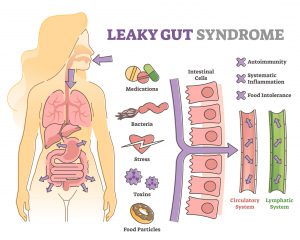
- Leaky gut (occurs in the small intestine)
- SIBO (small intestinal bacterial overgrowth)
- Antibodies against cells in the stomach (autoimmune)
- Insufficient stomach acid production
- Insufficient digestive enzymes from the pancreas
- Low levels of brush border digestive enzymes produced in the small intestine
- Food sensitivities or food allergies
- Yeast overgrowth
- Parasites
- Imbalanced neurological regulation of digestive processes (this includes the parasympathetic nervous system, vagus nerve and the enteric nervous system)
As you can see, there are quite a few things that can go wrong in the gut. Many people don’t realize that when one of these problems occur it can cause other problems to develop.
How one gut problem causes more gut problems
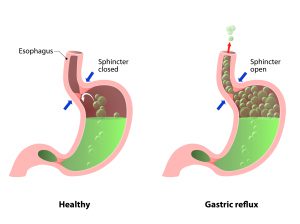 Let’s say you have low stomach acid. This results in poor digestion of food in the stomach and often leads to the formation of gases and pressure which leads to acid reflux or GERD. (Acid reflux is almost never due to excess acid production…see the stomach pictures… gases and pressure building up in the stomach which forces its contents up into the esophagus).
So, you take an antacid to reduce your symptoms. This can lead to an overgrowth of bacteria in your small intestine, and we call that SIBO.
One of your body’s natural defenses against SIBO is having the acidic contents of your stomach dump into the small intestine; thus, killing any bacteria and yeast in your small intestine.
Now you have 3 problems: low acid, poor digestion and SIBO. This combination of problems can upset the function in the small intestine and lead to reduced production of brush border enzymes and a leaky gut; now you are up to 5 different problems in the gut.
Read the section below. It is a bit complicated, but it will give you some appreciation for how complex your digestive system is… how stomach acid, hormones and the nervous system are all required…just to perform a single digestion process…the release digestive enzymes from the pancreas…
“Pancreatic juice is a liquid secreted by the pancreas, which contains digestive enzymes… The pancreas is a major part of the digestive system required for proper digestion and subsequent assimilation of macronutrients required for living.
Pancreatic juice secretion is principally regulated by the hormones secretin and cholecystokinin (see note below on this hormone), which are produced in the small intestine, and by the action of the autonomic nervous system.
The release of these hormones into the blood is stimulated by the entry of the acidic contents of the stomach into the small intestine.”
https://en.wikipedia.org/wiki/Pancreatic_juice
Cholecystokinin: this hormone causes the release of digestive enzymes and bile from the pancreas and gallbladder, respectively, and also acts as a hunger suppressant.
Insufficient stomach acid…just this one problem can lead to poor digestion, poor signaling for the pancreas to release digestive enzymes and the gallbladder to release bile, increased hunger, SIBO, leaky gut and increased food sensitivities.
I’m not saying that low stomach acid is the root cause of all gut issues, but now you see how one problem in the gut can lead to many problems.
In many cases you must treat multiple problems at the same time in order to get function restored to the gut.
 How do you heal your gut?
It is clear that one problem most often leads to other problems in the gut. The first step is to determine what you are trying to fix. Are you trying to heal a leaky gut? Do you also have SIBO? Do you have food sensitivities or food allergies?
You need to discover the root cause (or causes) of your gut issues. This is why functional medicine is so important. If you don’t identify the underlying problems, it can be very difficult to fix your gut.
Do you have gas and bloating?
This is what often occurs…

- You might think the gas and bloating is because you don’t have enough beneficial bacteria in your gut. So, you take a probiotic and your symptoms either get worse or don’t improve. If you have SIBO, you can actually make your symptoms worse. Taking a probiotic is adding even more bacteria to your small intestine, which is already overpopulated with bacteria.
- Since the probiotic did not help, you start taking a digestive enzyme for your gas and bloating and nothing improves. Your symptoms may be due to a lack of stomach acid and not digestive enzymes from your pancreas.
- You now decide to change your diet and only eat plant-based foods. Now that you don’t eat animal-based proteins, you dramatically increase your intake of grains, beans, and nuts. These foods are generally high in something called lectins which can cause digestion problems and inflammation for many people.
Does this sound familiar…jumping from one solution to another, not making progress and getting more frustrated.
There are so many solutions floating around out there on how “how to fix your gut” but it is hard to know which solution will work for you.
What is the root cause?
One more thing you should keep in mind…why do you have the health problem?
What is causing the gut problem you now have. Lets use SIBO as an example of finding the root cause of a digestion problem.
If you get tested and diagnosed with SIBO then your doctor might recommend an antibiotic like Rifaximin/Xifaxan. This can kill off the bacteria in your small intestine, but this does not explain why all of those bacteria got there in the first place and what will prevent the bacteria from coming back? Chances are, they will come back…
“What is the likelihood of SIBO recurrence after completing a course of rifaximin treatment? To help address this question, Lauritano and colleagues treated 80 consecutive patients with SIBO with rifaximin 400 mg three times daily for 10 days. The presence of SIBO was followed up at 3, 6 and 9 months after the end of treatment. Recurrence of SIBO was documented in 12.6% of patients at 3 months, in 27.5% of patients at 6 months and in 43.7% of patients at 9 months. These results suggest that there is the need for further treatment courses in many patients”
In this study, the “solution” was that individuals might need to take the antibiotic more often. They are not looking at WHY the person keeps developing an overgrowth of bacteria in the small intestine. More rifaximin is not the solution.
Discover the root cause (causes) of your gut issues and address them. Its hard to heal the gut when you don’t know what is wrong with it. Discover (not guess) what is out of balance and address the root causes of your gut issue. This is what functional medicine is based on; discovering and addressing root causes and working with your body’s natural biological functions. If you are looking for a new approach to life and live near Naperville or nearby in Chicago or Orland Park, do not hesitate to reach out to our functional medicine doctor today!
The purpose of functional medicine is:
Understanding how the body works, knowing how and where to investigate health issues, knowing what to look for, understanding the significance of what is found and creating a plan of action to reverse and correct the root cause the health problems.
My wish for you…health, happiness and a better quality of life!
If you would like more information about functional medicine and integrative medicine or Dr. Sexton go to napervilleintegratedwellness.com
Chicago functional medicine doctor
Do your own research, inform yourself and ask lots of questions. When collecting information, you MUST consider the source. There is no shortage of false, misleading, outdated, profit-driven and utterly biased information in healthcare today, even from the most respected sources and organizations.
This approach to healthcare is not intended to diagnose, treat, cure, mitigate, or prevent any disease. This article is for information purposes and is not a substitute professional healthcare services. Contact our office for more information. See our functional medicine Google reviews.